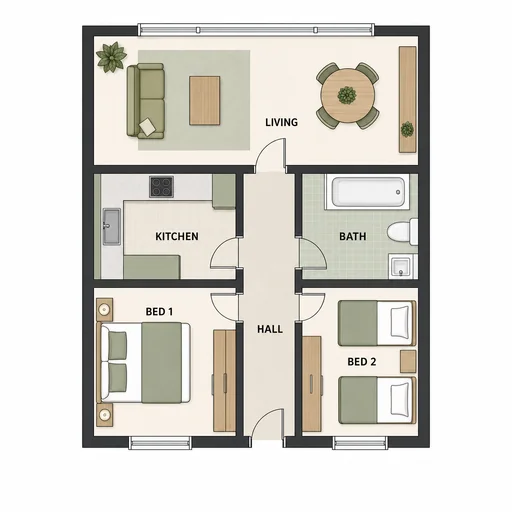
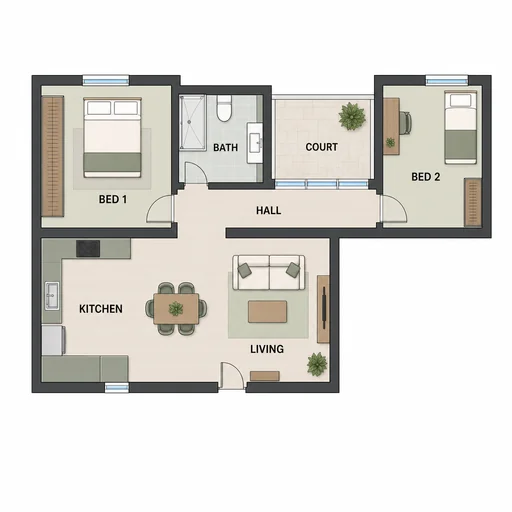
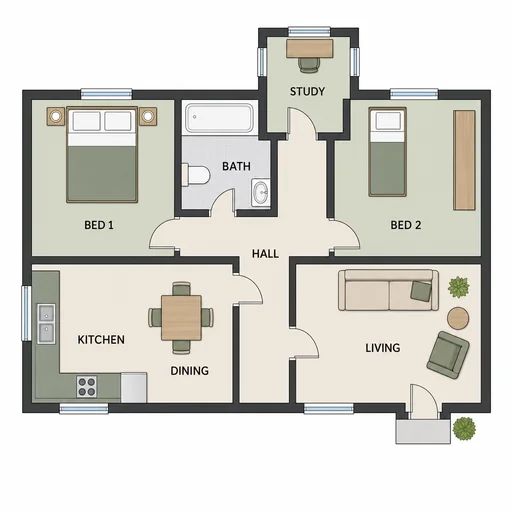
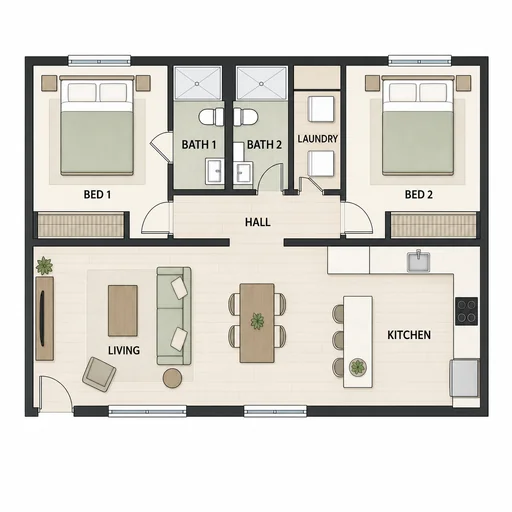
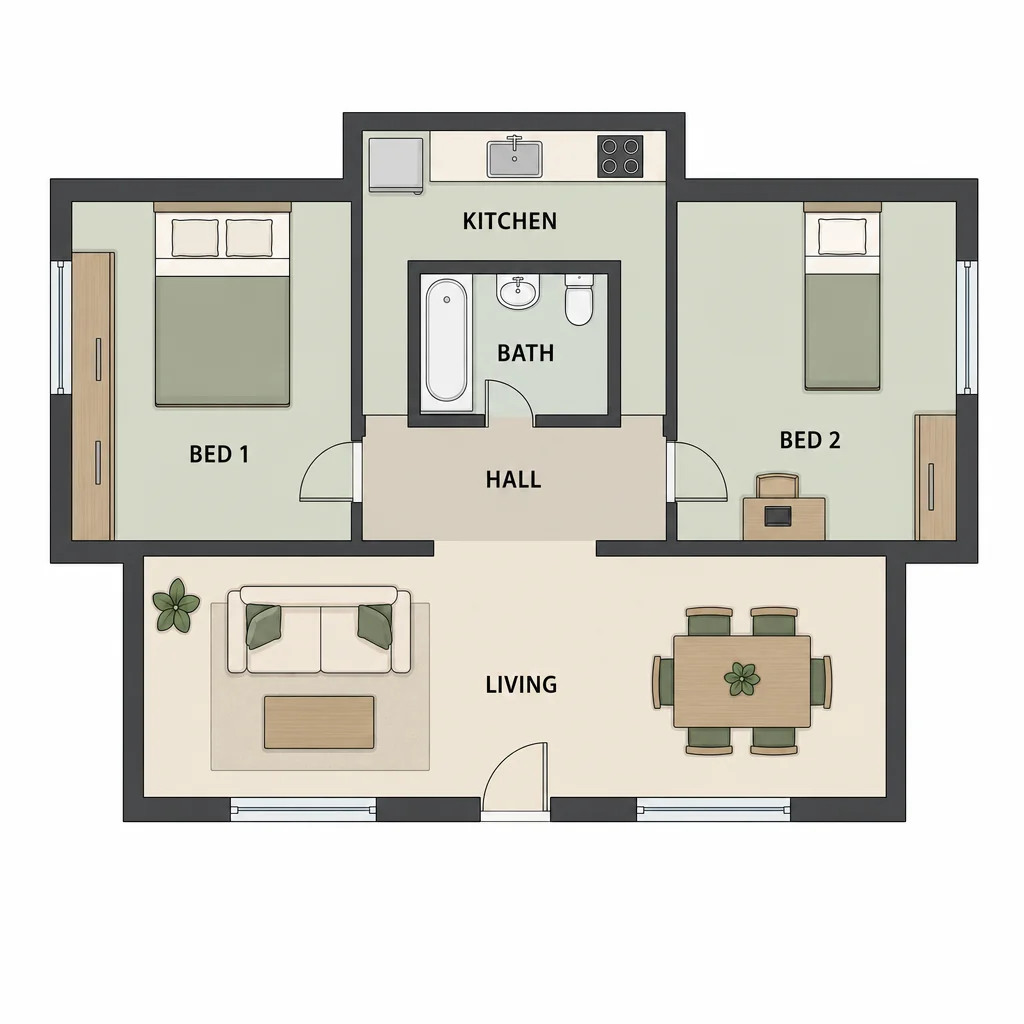
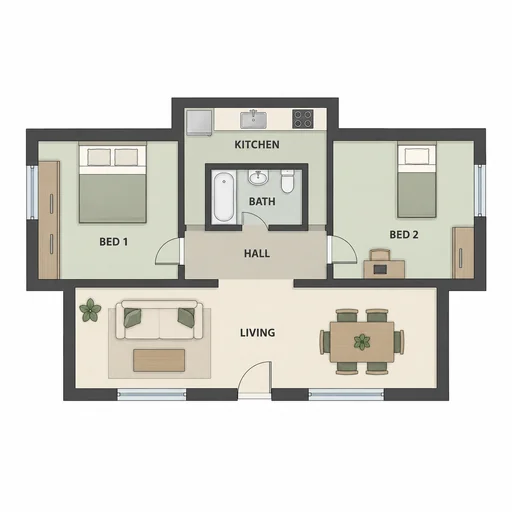
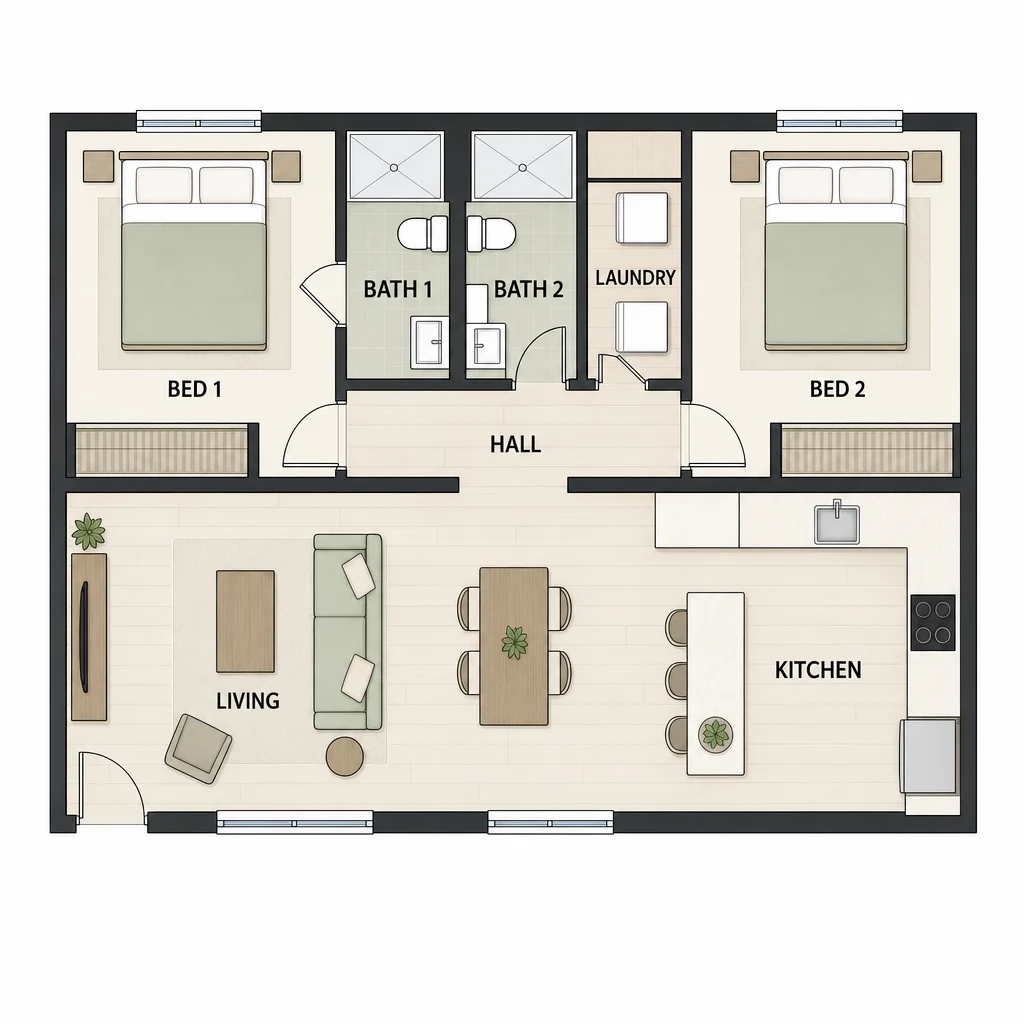
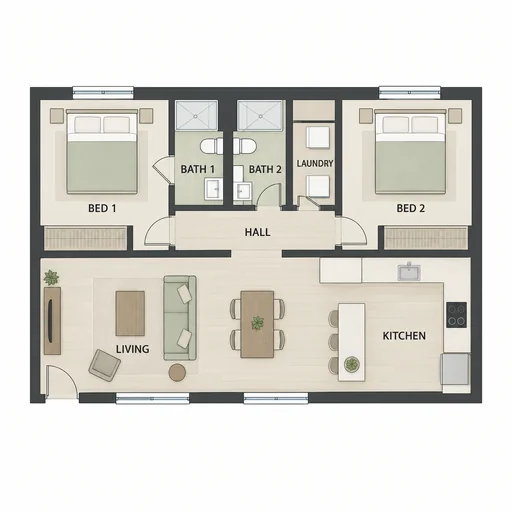
Split-bedroom floor plan with open hall passages beside a central bath, a kitchen above, and living and six-seat dining below.Rectangular two-bedroom floor plan with a central hall, kitchen and bath on either side, and a living and dining room at the far end.L-shaped two-bedroom floor plan around a courtyard, with bedrooms across a hall and a combined kitchen, dining and living space below.Two-bedroom cottage floor plan with a projecting study, central hall and bath, kitchen and dining at left, and living room at right.Two-bedroom plan with two bathrooms, a laundry, central hall, and an open living, dining and kitchen area.

Two-bedroom floor plan

Design a clear top-down two-bedroom layout with sensible circulation, accurate furniture scale, and labeled rooms for planning or presentations.

  1. Describe
  2. Log in
  3. Create
  • Describe your layout

    Describe intended plan, room functions, approximate proportions, and any required labels or constraints.

  • Shape spatial details

    Describe circulation, door swings, furniture placement, and scale so the plan reads clearly.

  • Keep room relationships clear

    Review the top-down plan for sensible adjacency, circulation, and preserved bedroom proportions.

Floor plan examples

Clear, buildable two-bedroom layouts

Use top-down diagrams that show room relationships, circulation paths, furniture at scale, and optional labels for contractor review or leasing listings.

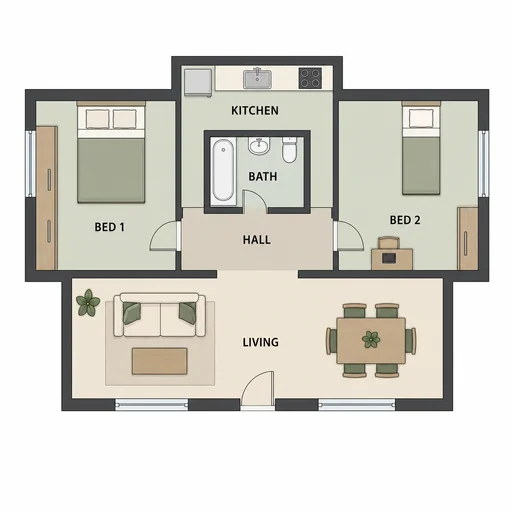
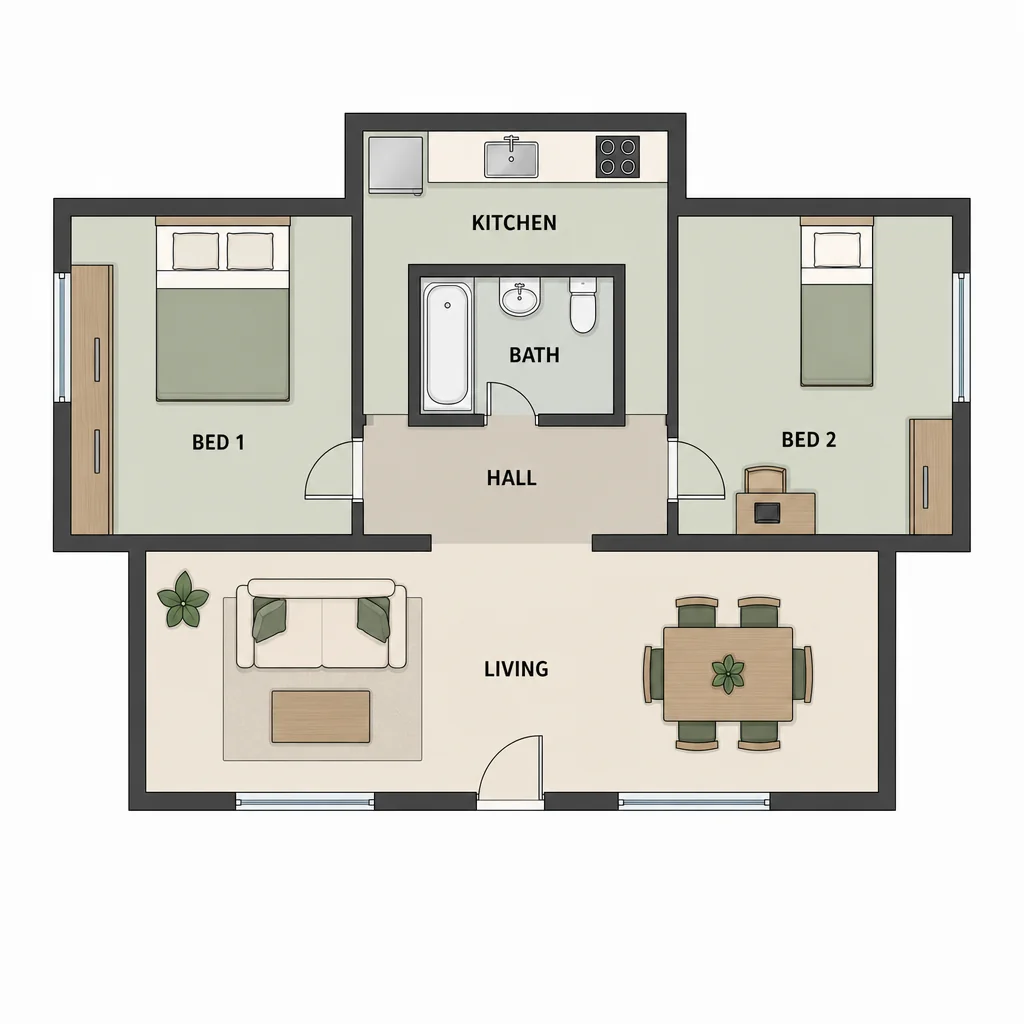
Split-bedroom floor plan with open hall passages beside a central bath, a kitchen above, and living and six-seat dining below.
Source 1 for Two-bedroom floor plan: split bedroom rectangular flat.
Two-bedroom plan with two bathrooms, a laundry, central hall, and an open living, dining and kitchen area.
Source 1 for Two-bedroom floor plan: two bedroom dual bath apartment.
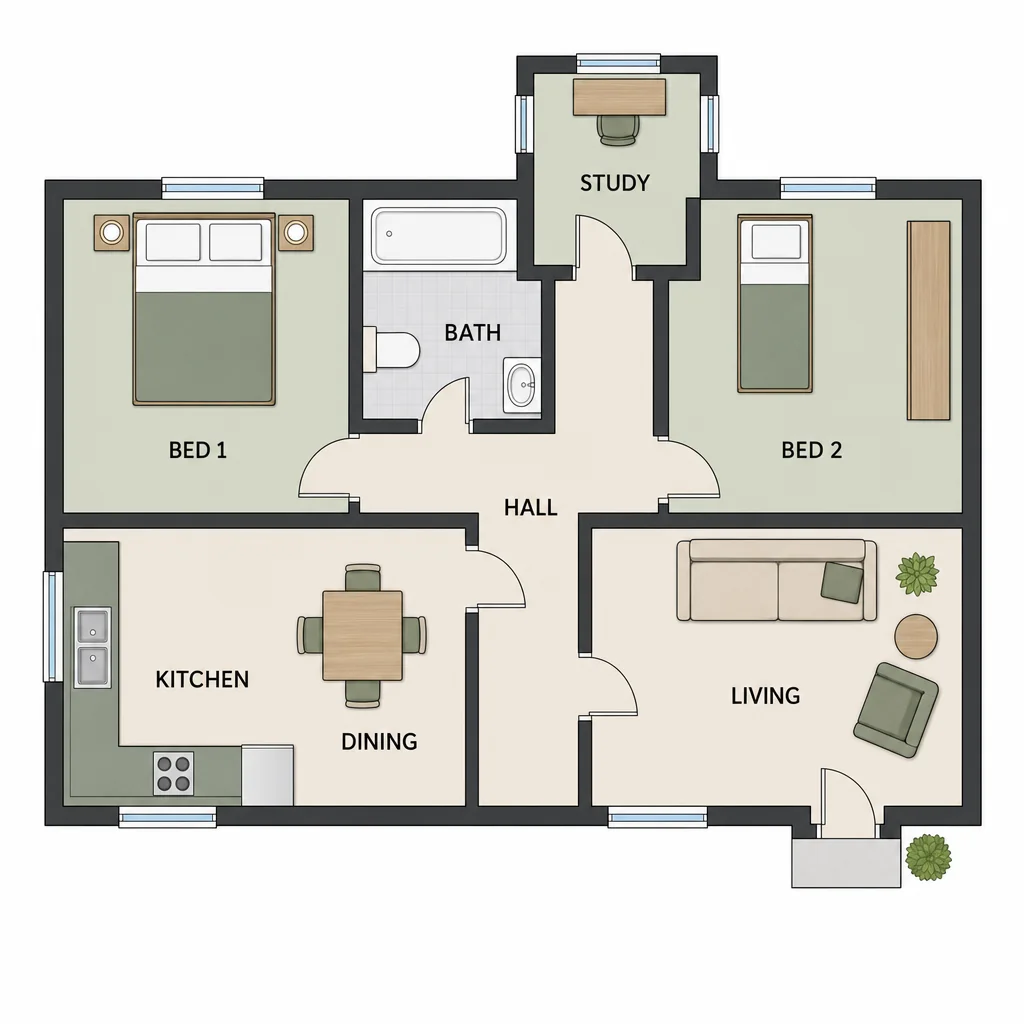
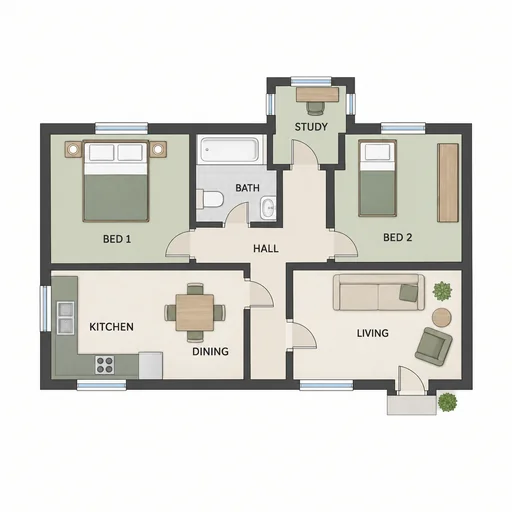
Two-bedroom cottage floor plan with a projecting study, central hall and bath, kitchen and dining at left, and living room at right.
Source 1 for Two-bedroom floor plan: two bedroom cottage study nook.

Get started

Attach the existing source, request one edit, and review the edited result.

Step 1

Attach the existing source

Use the existing finished source shown here.
Step 2

Request the edit

Describe the change to the attached source.
Step 3: Review the edited result.

Step 3

Review the edited result

Check the result against the requested details and preserved constraints.